

04 Sep UV Printing on Fabric: The Complete Guide to Textile Printing
UV printing on fabric is a revolutionary digital printing technology that uses ultraviolet (UV) light to instantly cure ink onto textiles, creating vibrant, durable, and scratch-resistant prints on a variety of fabric types. Unlike traditional printing methods, UV printing offers full-colour capability, fast production, and the ability to print on both natural and synthetic fabrics with the right techniques.
Can a UV printer print on fabric? The short answer is yes, but not directly on all fabrics. While UV printers excel on rigid surfaces, standard fabrics—especially natural fibres—are flexible and porous, which creates adhesion and durability challenges. However, with the right techniques and equipment, UV printing on fabric is not only possible but can be highly profitable for custom apparel and textile businesses.
At Krayon Enterprises in Nairobi CBD, we specialise in professional UV printing services on fabric for banners, flags, apparel, corporate gifts, and promotional textiles. With no minimum order and same-day turnaround, we make premium fabric printing accessible to businesses and individuals across Kenya. WhatsApp +254 722 376 151 for a quote.
What Is UV Printing on Fabric?
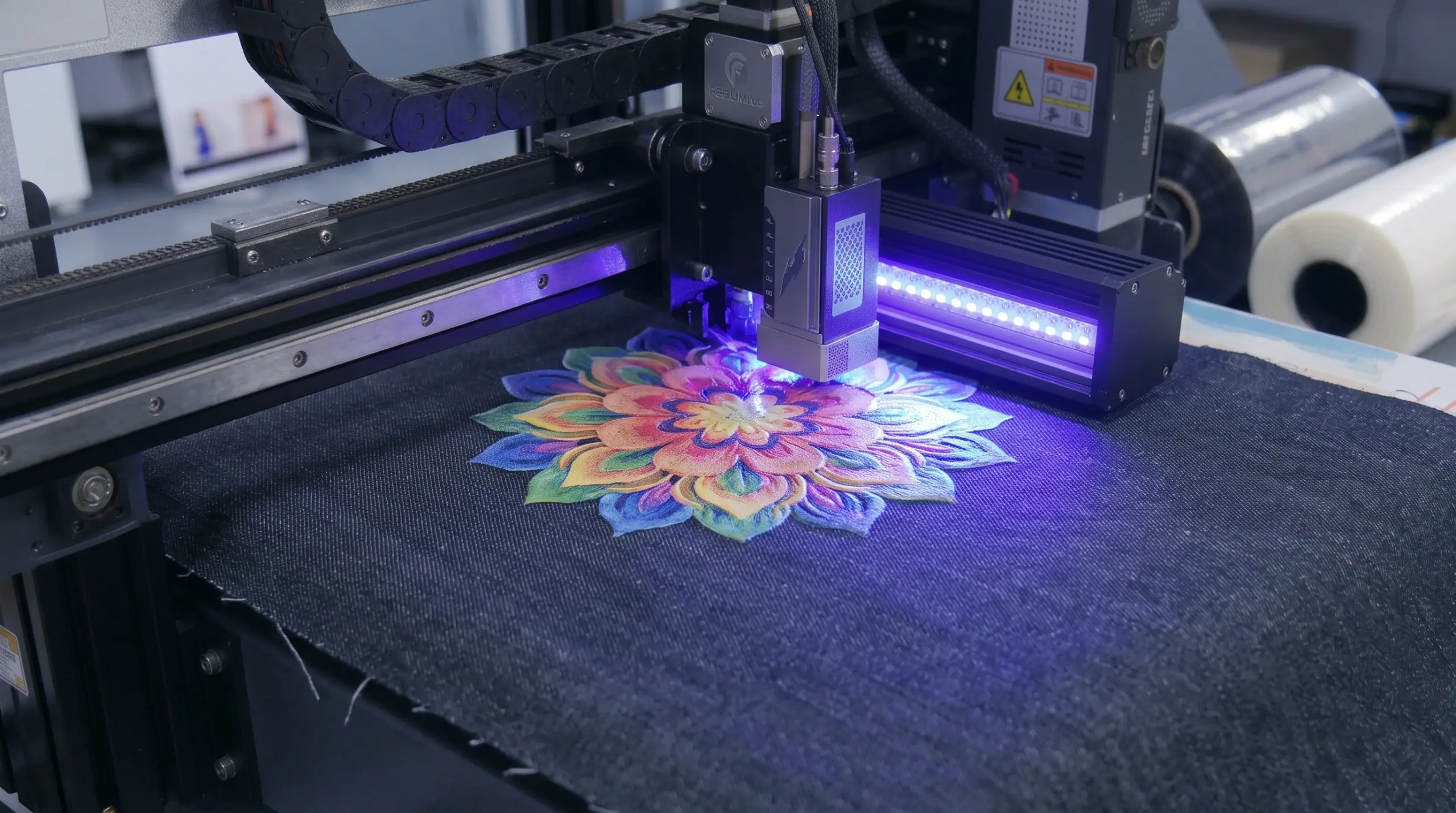
UV printing on fabric is a digital printing process where UV-curable inks are printed directly onto textiles or transferred onto them using specialised films. As the ink is deposited, UV LED lamps instantly cure it through a chemical reaction called photopolymerisation—transforming liquid ink into a solid, durable film in milliseconds.
Unlike dye-based inks that soak into fibres, UV ink forms a surface layer, which creates challenges for soft, stretchy materials but also enables printing on a wider range of substrates. Modern UV solutions have overcome these challenges through specialised techniques and transfer methods.
How UV Printing Works on Fabric
Step 1: Your digital design is prepared with correct resolution and colour profiles.
Step 2: Using a UV flatbed or UV DTF printer, UV-curable ink is deposited onto the fabric surface or transfer film.
Step 3: UV LED lamps instantly cure the ink through photopolymerisation, hardening it into a durable film.
Step 4: For direct printing, the fabric is ready immediately. For transfer methods, the printed film is heat-pressed onto the fabric.
Which Fabrics Can Be UV Printed?
UV printing works well on materials with smoother, less absorbent surfaces:
Suitable Fabrics:
-
Coated fabrics
-
High-polyester blends
-
PVC-based textiles and banners
-
Rigid or semi-rigid banner materials
-
TPU film and synthetic leather
-
Polyester and synthetic textiles
Fabrics Not Recommended for Direct UV Printing:
Direct UV printing is generally not recommended for:
-
Pure cotton
-
Silk and linen
-
Highly stretchy fabrics (spandex, lycra, etc.)
On these fabrics, UV ink often suffers from poor adhesion, cracking when stretched, and weak wash resistance. For these materials, transfer-based solutions are the better choice.
Why UV Printing on Fabric Is Challenging
The main difficulties include:
1. Ink Cannot Penetrate Fibres
UV ink sits on top rather than bonding deeply into the fabric.
2. Fabric Flexibility Causes Cracking
When the material bends or stretches, the cured ink layer can fracture.
3. Washing Resistance Issues
Standard surface prints tend to wear off after repeated washing.
4. Stiffness
UV printing cures ink on the fabric surface, which can make the fabric feel stiffer and may affect how it folds and stores.
Fortunately, modern UV solutions effectively overcome these challenges.
Solutions: How UV Printers CAN Print on Fabric
Solution 1: UV DTF Printing on Fabric
UV DTF is currently one of the easiest and most popular solutions for fabric printing. You print on AB film with a UV DTF printer, laminate it, and then heat press the finished decal onto the fabric.
Advantages:
-
No fabric pre-treatment required
-
Simple operation and fast workflow
-
Excellent for small-batch customisation, logos, and detailed designs
-
Works on dark fabrics with opaque white ink
Solution 2: UV Flatbed Printer + TPU Transfer Film
Print your design onto TPU (thermoplastic polyurethane) film using a UV flatbed printer, then heat transfer the film onto the target fabric.
Advantages:
-
Excellent durability and wash resistance
-
Good stretch performance
-
Ability to create beautiful raised 3D effects
-
Ideal for jackets, sportswear, and bags
Solution 3: Direct UV Printing on Coated Fabrics
For fabrics with smoother, less absorbent surfaces, direct UV printing can be used effectively.
Advantages:
-
Fast production—no transfer step required
-
Vibrant, full-colour results
-
Works on a wide variety of materials
-
Excellent for banners, flags, and rigid textiles
UV Printing on Fabric vs. Sublimation
| Feature | UV Printing | Sublimation |
|---|---|---|
| Ink Bonding | Sits on surface, cured by UV light | Bonds into polyester fibres through heat |
| Material | Coated fabrics, polyester, banners | Polyester fabrics only |
| Colours | Full-colour, photorealistic | Vibrant, saturated colours |
| Fabric Feel | May feel stiffer | Soft and flexible |
| Wash Resistance | Good with proper technique | Excellent—ink bonds into fibres |
| Durability | Scratch-resistant | Won’t crack or peel |
| Versatility | Wide range of materials | Limited to polyester |
UV printing offers greater material flexibility and the ability to print on a wider range of fabrics and substrates. However, for soft, flexible fabrics that will be washed frequently, sublimation may be the better choice.
When to Use UV Printing on Fabric
UV printing is ideal for:
-
Polyester banners and flags
-
Coated fabric signage
-
Rigid and semi-rigid textiles
-
Small-batch custom apparel
-
Dark garments (using UV DTF)
-
Products requiring 3D or raised effects
When to Use Sublimation
Sublimation is ideal for:
-
Soft, flexible fabrics
-
Sportswear and performance apparel
-
Large-batch fabric production
-
Items requiring frequent washing
-
Polyester-based textiles
Applications of UV Printing on Fabric
UV printing on fabric is used across multiple industries:
Events & Exhibitions:
-
Branded banners and flags
-
Fabric backdrops and displays
-
Pop-up fabric panels
-
Teardrop and beach flags
Corporate Branding:
-
Branded tote bags and gift bags
-
Corporate uniforms and apparel
-
Promotional textiles
-
Fabric notebooks and accessories
Retail & Merchandise:
-
Custom t-shirts, hoodies, and caps
-
Branded tote bags
-
Sportswear and team uniforms
-
Custom fabric accessories
Hospitality:
-
Personalised cushions and slippers
-
Branded room accessories
-
Fabric menus and welcome gifts
Interior Décor:
-
Custom fabric wall coverings
-
Curtains and upholstery
-
Decorative textile panels
UV Printing on Fabric in Kenya
Several companies in Nairobi offer UV printing and related services:
| Company | Services | Location |
|---|---|---|
| Krayon Enterprises | UV printing on fabric, pens, bottles, trophies & more | Lords House, Khoja Roundabout, Nairobi CBD |
| Sifa Crafts Limited | UV DTF and laser printing | Nairobi |
| Gallant Branding International | UV printing, DTF, sublimation | Nairobi |
| REDBERYL Kenya | UV printing, DTF, sublimation | Mfangano Street, Nairobi |
| Waves Branding | Sublimation printing for flags & banners | Keekorok Road, Nairobi CBD |
For fabric, sublimation is often the preferred method for soft, flexible textiles in Kenya. UV printing on fabric is typically used for coated materials, banners, and UV DTF transfers.
Frequently Asked Questions
Can a UV printer print on fabric?
Yes, but not directly on all fabrics. UV printing works well on coated fabrics, high-polyester blends, and banner materials. For natural fabrics like cotton, transfer methods like UV DTF are recommended.
What fabrics can be UV printed?
UV printing works on coated fabrics, high-polyester blends, PVC-based textiles, banners, TPU film, and synthetic leather.
Is UV printing on fabric durable?
With the right technique, UV printing on fabric can be durable. UV DTF transfers offer good wash resistance, while direct UV printing on coated fabrics provides scratch-resistant results.
Is UV printing better than sublimation for fabric?
It depends. Sublimation is better for soft, flexible polyester fabrics that require frequent washing. UV printing offers greater material flexibility and works on a wider range of fabrics.
Can UV printing be used on cotton?
Direct UV printing on pure cotton is not recommended as the ink sits on the surface and can crack or peel. However, UV DTF transfers can be applied to cotton fabrics.
Do you have a minimum order for UV fabric printing?
No. We handle orders of all sizes—from a single item to bulk production.
What is your turnaround time for UV fabric printing?
Same-day turnaround is available for urgent orders. Standard orders: 2-3 business days.
Why Choose Krayon for UV Printing on Fabric in Nairobi
At Krayon Enterprises, located at Lords House near Khoja Roundabout in Nairobi CBD, we offer:
-
Premium Quality — Advanced UV printing technology for vibrant, durable results
-
No Minimum Order — From a single item to bulk production
-
Same-Day Turnaround — Available for urgent orders
-
Expert Design Support — Assistance with artwork preparation and colour matching
-
Competitive Pricing — Affordable rates without compromising quality
-
Convenient Nairobi CBD Location — Easy collection at Lords House near Khoja Roundabout
Get Started with Krayon Today
Ready to experience professional UV printing on fabric in Nairobi? At Krayon, we combine technical expertise, premium quality, and exceptional customer service to deliver UV fabric printing that impresses and lasts.
Contact Us
📱 WhatsApp us: +254 722 376 151
📍 Location: Lords House near Khoja Roundabout, Nairobi CBD, Kenya
📞 Phone: +254 722 376 151
📧 Email: sales@krayon.co.ke | info@krayone.com
🌐 Website: krayon.co.ke
Get a Quote
Ready to create professional UV printing on fabric for your business? Chat with us directly on WhatsApp for pricing, turnaround time, and minimum order quantities.
WhatsApp us: +254 722 376 151
No Comments